General Blog shares the latest Hong Kong business and accounting insights Covering Hong Kong company incorporation, Hong Kong tax regulations, company secretarial services, and entrepreneurship experience
Do IG Shops/Online Stores Need to Pay Tax? Income Recognition, Bookkeeping, and Common Pitfalls
For IG Shop/online store tax filing, there is no tax-free threshold for Hong Kong Profits Tax; in principle, even HKD 1 of profit must be reported. For unincorporated businesses (sole proprietorship), the first HKD 2,000,000 is taxed at 7.5%, and 15% thereafter; for limited companies, the first HKD 2,000,000 is taxed at 8.25%, and 16.5% thereafter.
Running an IG Shop or online store and selling a few items to a few hundred followers—do you think the Inland Revenue Department (IRD) won’t find out? Wrong. In recent years, the IRD has proactively investigated online stores, platform transaction records, and Faster Payment System (FPS) transfers. As long as it is a “business”, you face the same tax filing obligations whether you do it full-time or part-time.
How does Hong Kong define a “business”? Does your IG Shop count?
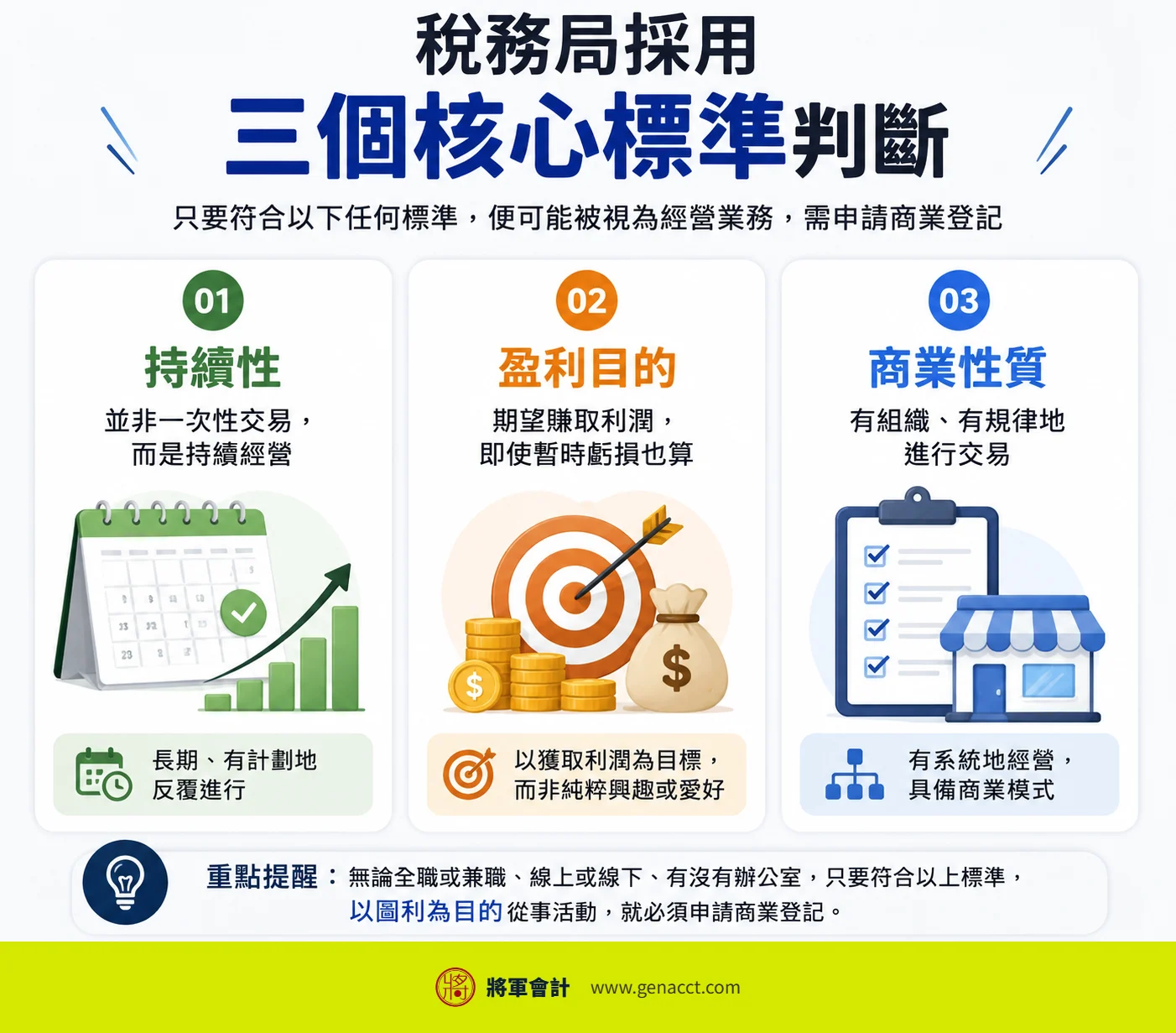
Not everyone who sells things on IG is considered a “business”. The IRD uses three core criteria to assess:
Continuity: Not a one-off transaction, but ongoing operations
Profit motive: An intention to make a profit, even if there are temporary losses
Commercial nature: Transactions carried out in an organised and regular manner
Real case analysis
Scenario
Treated as a business?
Occasionally selling second-hand clothing on IG (one-off)
Usually not
Selling goods on Carousell every month
Definitely a business
An IG Shop with regular inventory, marketing, and customer service
Definitely a business
Operating regularly via platforms such as Toby/Shopify
Definitely a business
If you don’t report, how likely are you to be investigated?
The IRD can request transaction records from platforms
FPS real-name registration is linked to bank accounts, and the IRD can obtain transfer records from the HKMA
Banks may report suspicious transaction records to law enforcement agencies. For details, please refer to Bank account frozen.
When do IG Shops need to apply for Business Registration?
Basic threshold
Under the Business Registration Ordinance, an unincorporated business must apply for Business Registration within one month after commencing business, while a limited company must be incorporated before operations and submit the Notice of Commencement of Business by a Corporation (Form IRBR200) within one month after operations begin.
Business structure
How to apply
Sole proprietorship (individual BR)
The proprietor applies for BR in their personal capacity
Limited company
Apply for BR at the same time as incorporation
The Business Registration Certificate fee is HKD 2,350 (one year) or HKD 3,950 (three years). For details, please refer to Business Registration Certificate fees.
⚠️ Important misconception correction: Hong Kong Profits Tax has no “monthly income threshold” tax-free limit. As long as it is a business, in principle you must file tax.
How is online store income recognised? Which income must be reported for tax?
Principles of assessable income
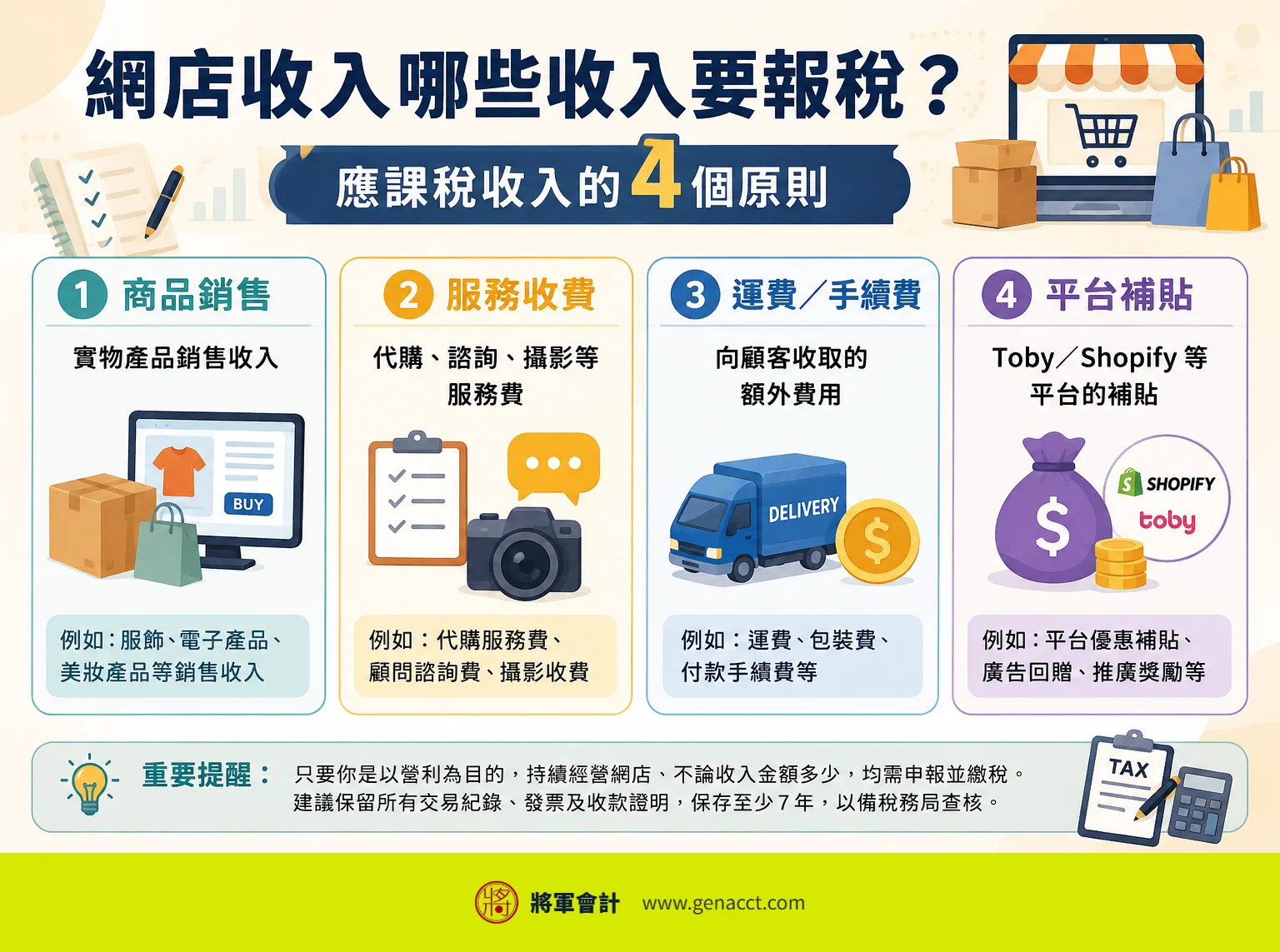
Under the Inland Revenue Ordinance, the following types of income are all assessable income:
Product sales: Revenue from selling physical products
Service fees: Fees for proxy purchasing, consulting, photography, etc.
Shipping/handling fees: Additional charges collected from customers
Platform subsidies: Subsidies from platforms such as Toby/Shopify
Common income misconceptions
Misconception
Reality
“I’m doing proxy purchasing for others, not selling my own goods.”
Proxy purchasing service fees are service income and still must be reported
“I collect money via e-payment platforms, so the IRD can’t check.”
All payment platforms are registered under real-name systems; the IRD can obtain records from the HKMA
“If income is less than expenses, I don’t need to file.”
Even in a loss year, you must report truthfully; losses can be carried forward to offset future profits
How should non-HKD income be calculated?
Income from overseas platforms must be converted into HKD using the exchange rate on the receipt date for reporting. Foreign currencies received via PayPal and Stripe must also be converted. It is recommended to keep complete exchange rate records for future verification.
The tax implications of online store payment tools
Faster Payment System (FPS)
Real-name registration: Linked to bank accounts and traceable
Tax implications: The IRD can obtain FPS transaction records from the HKMA
Recommendation: Open a separate business account to avoid mixing personal and business funds
PayMe, Tap&Go, AlipayHK
Personal version: Not recommended for business collections; difficult to explain the nature of funds during an audit
Business version: Has a separate business account, clearly separating business and personal cash flows
Risk: If a personal account receives business funds, it may be difficult to provide a reasonable explanation if the IRD reviews the accounts
Credit cards, PayPal, Stripe
Platforms keep complete transaction data, which can be obtained by the IRD
Recommendation: Apply for a dedicated business account for collections so all transactions are clearly traceable
Online store bookkeeping basics — When to start? How to keep records?
Why keep books?
Legal requirement: Under the Inland Revenue Ordinance, business taxpayers must keep sufficient accounting records.
Retention period: At least 7 years from the transaction date
Consequences: Failure to keep records may result in a maximum fine of HKD 100,000 + 6 months’ imprisonment
Minimum bookkeeping requirements
Income records: Date, amount, and customer for each sale
Bank statements: Monthly statements for all business accounts
Invoices/receipts: Supporting documents for major expenses
💡 Sole proprietorship tip: Under the Inland Revenue Ordinance, if total annual income does not exceed HKD 2,000,000, you do not need to attach accounts when submitting BIR60, but you must keep them and be able to provide them if the IRD makes enquiries later.
General’s tip: Even if the IRD does not require accounts to be attached, General recommends submitting the accounts together with Form BIR60 to avoid being unable to locate records if the IRD conducts a spot check later.
Common deductible expense items
Item
Description
Cost of goods
Actual cost of purchasing goods
Shipping/logistics
Costs of delivering goods
Advertising expenses
Facebook/IG advertising spend
Online sales platform fees
Toby/Shopify commissions
Packaging materials
Cartons, bubble wrap, tape
Business Registration fee
BR fees are tax-deductible
E-payment platform fees
PayMe, credit cards, etc.
Tax filing fees
Costs of preparing accounts/audit reports (if required)
⚠️ Note: Expenses that mix personal and business use must be apportioned on a reasonable basis.
Common tax filing pitfalls — How many have you fallen into?
Pitfall 1: “Part-time online stores don’t need to file tax.”
Reality: Whether you need to file tax is not determined by full-time vs part-time, but by whether you are continuously carrying on a business. Even if you only spend a few hours a week, as long as it is organised and ongoing, in principle you still need to file tax.
Pitfall 2: “If profit is below a certain amount, I don’t need to file.”
Reality: Hong Kong Profits Tax has no fixed tax-free threshold. Even HKD 1 of profit must, in principle, be reported truthfully as long as it is a business.
Pitfall 3: “The IRD can’t check online transactions.”
Reality: The IRD can obtain information from banks and payment platforms. FPS uses real-name registration, and e-commerce platforms keep complete transaction records—both can be lawfully requested by the IRD.
Pitfall 4: “If I lose money, I don’t need to file.”
Reality: Even in a loss year, you must submit the Profits Tax Return (BIR60) on time. Losses can be carried forward to offset future profits; not filing for a long time may cause you to lose this entitlement.
Pitfall 5: “Money received via PayPal isn’t income.”
Reality: As long as the receipt is business-related, it is assessable income regardless of the tool used (FPS, PayMe, PayPal, Stripe).
Should you run an online store as an individual or set up a limited company?
Tax comparison of the two models
Item
Sole proprietorship (individual BR)
Limited company
How to file tax
Profits Tax, filed via BIR60
Separate Profits Tax, filed via BIR51
Tax rate (two-tiered)
First HKD 2,000,000 at 7.5%; 15% thereafter
First HKD 2,000,000 at 8.25%; 16.5% thereafter
Tax return
BIR60 Part 5 (sole proprietorship); BIR52 (partnership)
BIR51
Mandatory audit
Not required
Must be audited by a practising accountant
Liability separation
No; the proprietor has unlimited personal liability
Yes; limited to shares
Best suited for
Start-ups, testing the waters
Scaling, long-term operations, need to ring-fence risk
Self-employed individuals may consider “Personal Assessment”
Proprietors operating a sole proprietorship may opt for “Personal Assessment” to consolidate their tax assessment. This option is particularly suitable for:
Business losses: Losses for the year can offset other income in the same year (e.g. salaries), directly reducing the overall tax burden
Multiple types of income: Salaries, profits, and property rental income can be aggregated and calculated together
Use of personal allowances: Basic allowance of HKD 132,000 (Year of Assessment 2025/26)
⚠️ Note:
The progressive tax rate goes up to 17%, which is higher than the standard non-corporate Profits Tax rate of 15%. If your marginal tax rate has already reached 17%, choosing Personal Assessment may result in higher tax. However, the IRD will automatically compare “separate taxation” vs “Personal Assessment” and apply the lower amount, so taxpayers need not worry.
How to apply: Tick “Yes” in Part 7 of BIR60, or make the election in the Individual Tax Return (BIR60). For details, please refer to the Personal Assessment guide. The election must be made within two years after the end of the relevant year of assessment.
When is it recommended to consider setting up a limited company?
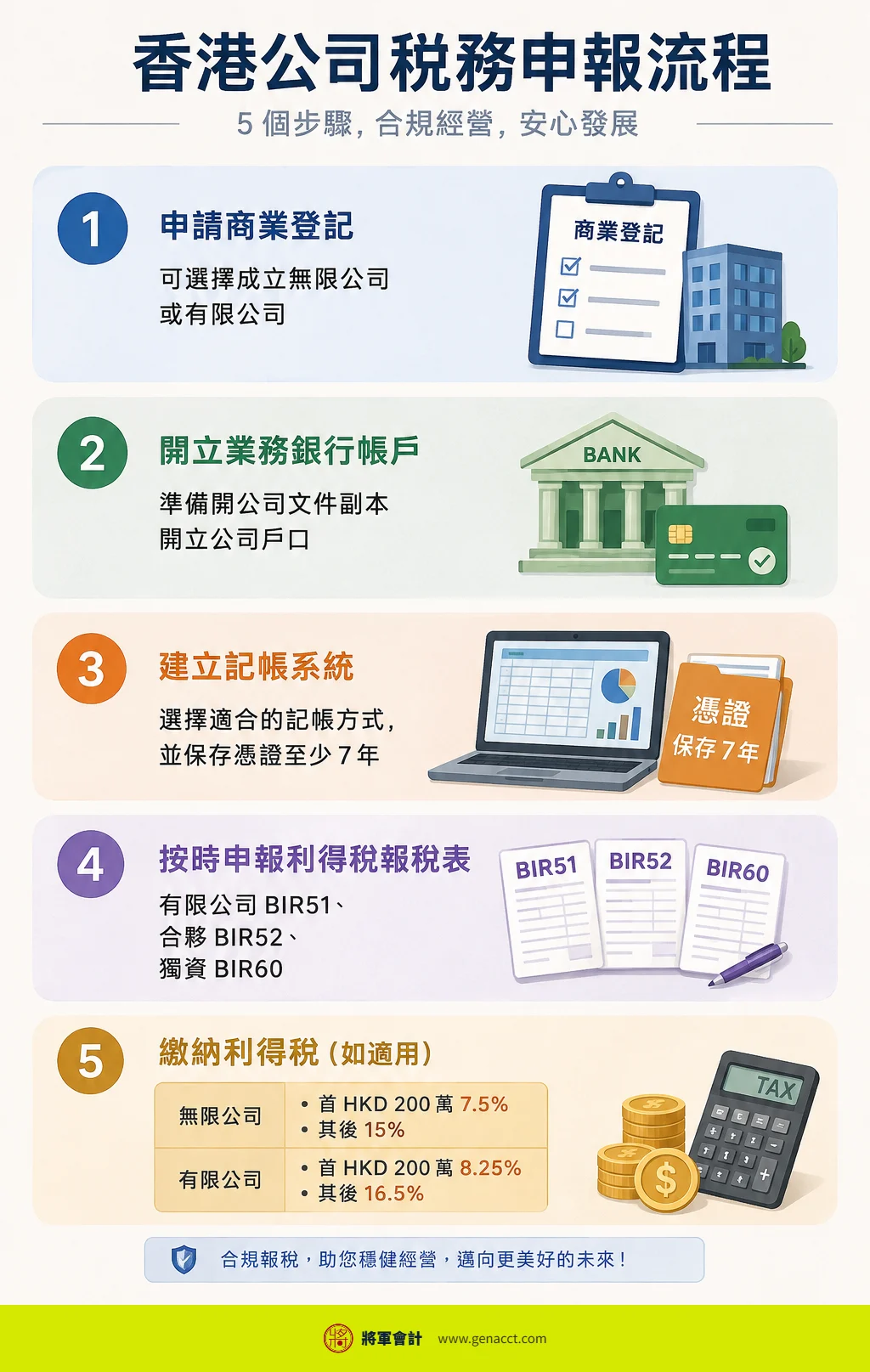
Hong Kong online store tax filing process: Step-by-step
Step 1: Apply for Business Registration
You may choose to operate under your personal name (unincorporated business) or incorporate a limited company. Prepare your HKID, address proof, and a description of business nature—General Accounting can handle it for you.
Prepare a copy of the BR and the Certificate of Incorporation (for limited companies). For the detailed process, please refer to the company bank account opening process. Keep business and personal accounts separate to facilitate bookkeeping and IRD review later.
Step 3: Set up a bookkeeping system
Choose a suitable bookkeeping method (Excel spreadsheet/accounting software/outsource to an accountant). If you need to use the government’s e-filing platform, please refer to the detailed guide on eTAX e-filing. Keep all income and expense supporting documents for at least 7 years.
Unincorporated business: No audit report required, but accounts must be kept
Limited company: An audit report must be signed by a practising accountant every year
Step 4: File on time after receiving the Profits Tax Return from the IRD
Deadline: Limited companies or partnerships may apply for an extension based on the filing category code; sole proprietorships have a 3-month deadline, automatically extended to 4 months if e-filing is used. For details, please refer to Tax filing deadlines at a glance.
Step 5: Pay Profits Tax (if applicable)
Business structure
Two-tiered tax rates
Unincorporated business (sole proprietorship/partnership)
First HKD 2,000,000 at 7.5%; 15% thereafter
Limited company (corporation)
First HKD 2,000,000 at 8.25%; 16.5% thereafter
💡 Tax reduction for Year of Assessment 2025/26: 100% reduction of Profits Tax for that year, capped at HKD 3,000 per case.
💡 Directors’ fees note for limited companies: Directors’ fees paid by a limited company are subject to Salaries Tax for the director, not the company’s Profits Tax. Before paying directors’ fees, the director must provide a directors’ fees notice to the company. For details, please refer to Differences between directors and shareholders and Employer’s tax filing guide.
Conclusion
Core concepts for online store tax filing
Whether you operate an online store full-time or sell goods on IG in your spare time, as long as the business meets the definitions of “continuity, profitability, and commerciality,” you must assume the same tax reporting responsibilities as a formal enterprise. Hong Kong Profits Tax has no tax-free threshold—in principle, even a profit of HKD 1 must be reported.
Risks that are easily overlooked
Many new online store owners underestimate the risk of a tax investigation. In fact, in recent years the IRD has actively obtained transaction records from major e-payment platforms and banks. FPS real-name registration has also made transfers that were previously hard to trace transparent and traceable. Failing to report in the hope of getting away with it not only exposes you to penalties, but may also affect your personal credit and future travel.
Bookkeeping is the lowest-cost protection
Rather than scrambling to patch things up when the IRD investigates later, it is better to set up a simple bookkeeping system from day one. For sole proprietorships with annual turnover not exceeding HKD 2,000,000, you do not need to attach accounts when submitting BIR60—but you must keep them, and the IRD has the right to obtain them at any time. It is also recommended to open a separate business bank account to completely separate personal and business funds.
Do IG Shops need to apply for Business Registration?
As long as it is a “continuous, profit-making” business, you must apply for Business Registration within one month after commencing business. Under section 9 of the Business Registration Ordinance (Cap. 310), you must apply for BR within one month after commencement.
How much online store income do you need before you must file tax?
Hong Kong Profits Tax has no income tax-free threshold. As long as it is business income, in principle it must be reported truthfully.
Do I need to report tax if I receive payments via PayMe or FPS?
Yes. As long as it is business-related receipts, it is assessable income regardless of the tool used. The IRD may lawfully obtain information from payment platforms.
Can an online store use a personal account to receive money?
Technically yes, but it is not recommended. It is recommended to open a separate business account to avoid mixing personal and business funds, which can be difficult to explain if the IRD reviews the accounts.
What is a self-employed person? Does running an IG Shop part-time count?
A self-employed person refers to someone who earns income by trading goods or providing services without an employment relationship. As long as an IG Shop owner continuously operates a business for profit, they are, in principle, self-employed whether full-time or part-time. The proprietor may elect “Personal Assessment” to consolidate calculations and potentially use the basic allowance of HKD 132,000 (2025/26) to reduce tax; however, if the marginal tax rate has already reached 17%, the IRD will automatically apply the lower option.
What supporting documents should be kept for online store bookkeeping?
Income records, expense invoices or receipts, bank statements, platform transaction reports, etc. The retention period is at least 7 years. Under the Inland Revenue Ordinance (Cap. 112) §51C, failure to keep records may result in a maximum fine of HKD 100,000 + 6 months’ imprisonment.
Is an unincorporated business or a limited company more suitable for me?
It depends on your scale and risk tolerance. For start-ups testing the waters or part-time operations, it is recommended to start with an unincorporated business (individual BR) for lower costs and relatively simpler tax filing. If the business scales up, needs to accept large payments, or you want to ring-fence personal asset risk, it is recommended to consider incorporating a limited company.
What are the penalties for late tax filing?
Late submission of a tax return may be subject to penalties, starting from $1,200. Serious cases may be prosecuted; long-term non-compliance may lead the IRD to issue estimated assessments and impose higher penalties.
General Accounting has been established for over 20 years and holds a Trust or Company Service Provider licence (TC002940). We provide comprehensive BR management services, including BR renewal reminders, address changes, business cessation, and all related tax matters.
Senior Consultant at General Accounting, specialising in Hong Kong company incorporation and company secretarial matters, with over 10,000 incorporation and compliance cases handled.
Founded in 2005, General Accounting holds a Trust or Company Service Provider licence issued by the Hong Kong Companies Registry, licence no.
TC002940,
regulated under the Anti-Money Laundering and Counter-Terrorist Financing Ordinance.



 Under the Inland Revenue Ordinance, the following types of income are all assessable income:

 Under the Inland Revenue Ordinance, the following types of income are all assessable income: